Dr ZLR Cardiology IncDr Zama Ramagaga · Specialist Cardiologist
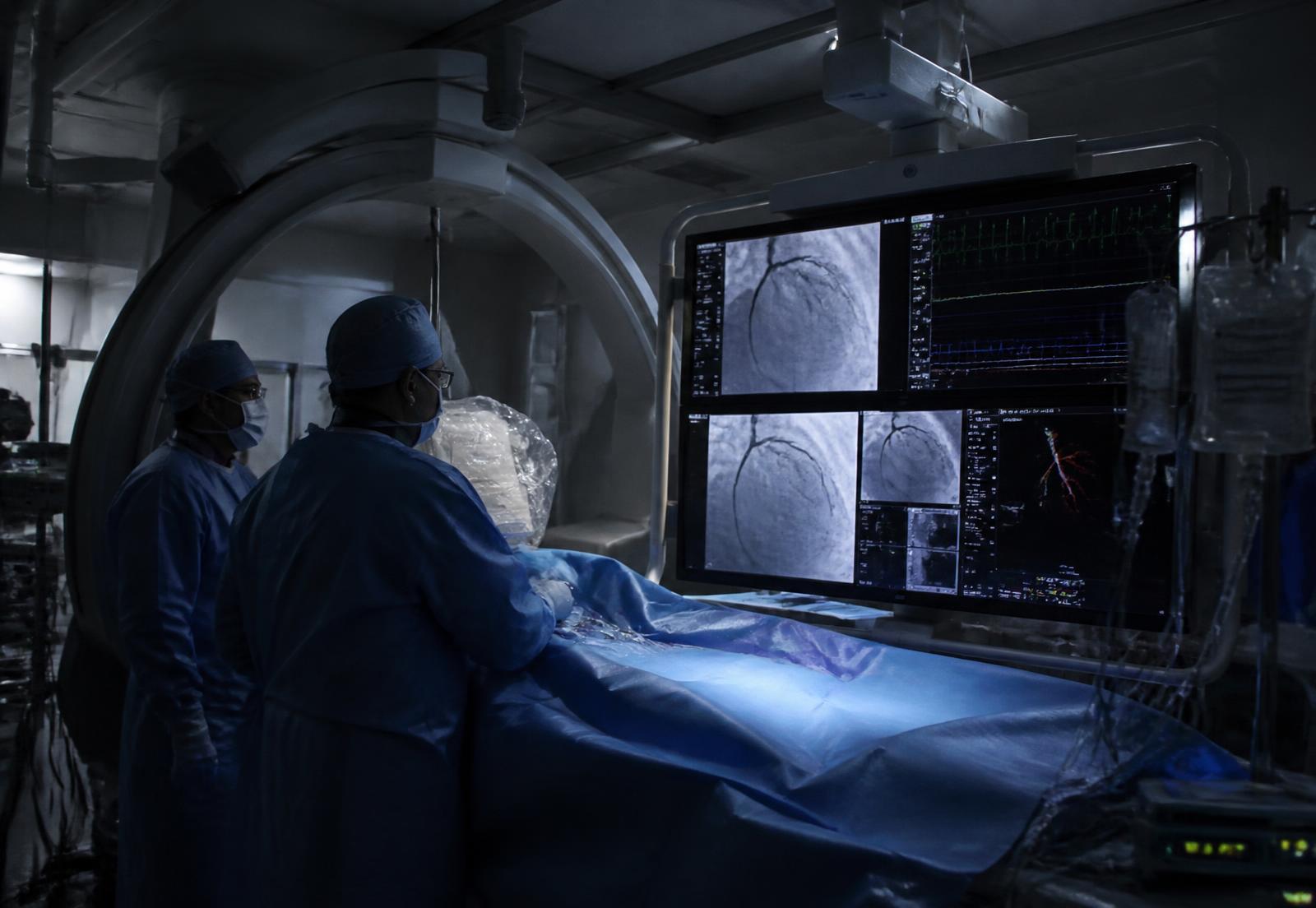
An interventional cardiology catheterisation laboratory prepared for a procedure

Cardiac Services

Coronary angiography

The definitive assessment of the coronary arteries — a detailed map of where blood flow is restricted, and how significantly.

Angiography answers a question that no other test can answer with the same certainty: exactly where the narrowing is, and what it means for the heart muscle beyond it.

What the procedure involves

A fine catheter is passed into the arterial system, usually from the wrist or the groin, under local anaesthetic. Contrast is injected into the coronary arteries while X-ray images are recorded, showing blood flow through each vessel in detail.

The procedure is performed in the catheterisation laboratory at Busamed Hillcrest Private Hospital, with continuous monitoring throughout.

Why it may be recommended

Angiography is considered where symptoms, examination findings or non-invasive tests suggest significant coronary artery disease, and where the result will shape treatment.

  • Chest pain with an abnormal or inconclusive non-invasive assessment
  • Assessment after a heart attack or an acute coronary presentation
  • Planning of revascularisation — stenting or bypass surgery
  • Assessment of coronary anatomy before valve or other cardiac surgery

On the day, and afterwards

You will receive specific instructions on fasting and medication beforehand, including any adjustment to blood thinners or diabetic medication. Most patients are observed for a period afterwards and go home the same day, with a companion to drive.

The findings are discussed with you directly. Where a narrowing requires treatment, options are explained — medical therapy, stenting, or referral for bypass surgery — with the reasoning for the recommendation.

Discuss whether angiography is appropriate

Angiography is recommended only after a specialist assessment. Contact the practice to arrange a consultation.