Dr ZLR Cardiology IncDr Zama Ramagaga · Specialist Cardiologist
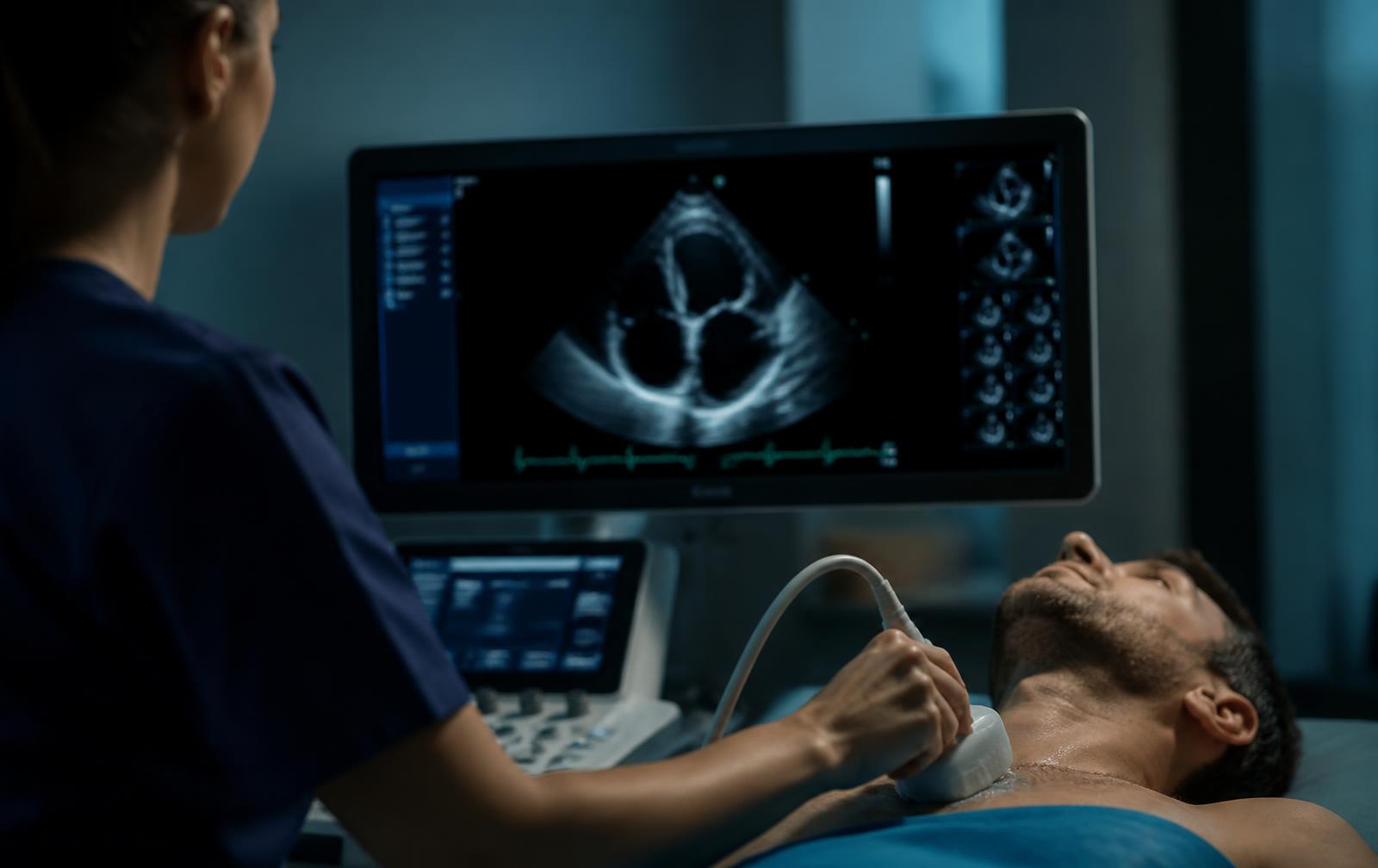
Echocardiography equipment in a cardiac diagnostic room

Cardiac Services

Diagnostic cardiology

Non-invasive investigations that answer a specific clinical question — performed carefully, interpreted by the cardiologist who saw you.

A test is only as useful as the question behind it. Each investigation is chosen to confirm, exclude or quantify something that will change your plan.

Electrocardiography (ECG)

A resting ECG records the electrical activity of the heart. It takes a few minutes, is painless, and can show rhythm disturbances, evidence of previous injury to the heart muscle, and strain patterns that guide further assessment.

Echocardiography

An ultrasound scan of the heart that shows the chambers, the valves and the pumping function in real time. Echocardiography is central to assessing heart failure, valve disease, murmurs and the effects of long-standing hypertension.

Stress testing

Exercise testing records the heart's response to graded exertion, which can reveal changes that are not present at rest. It is used in the assessment of exertional chest pain and to gauge functional capacity.

Ambulatory monitoring

Where symptoms come and go, a recording over 24 hours or longer captures the heart's rhythm during ordinary daily activity. Ambulatory blood pressure monitoring is used in the same way to establish a true blood pressure profile.

  • 24-hour and extended rhythm monitoring for palpitations and blackouts
  • Ambulatory blood pressure monitoring for suspected or resistant hypertension
  • Correlation of recorded events with a symptom diary

Arrange a cardiac investigation

Diagnostic testing is arranged following a specialist consultation, or on referral from your doctor.